Turning empathy into measurable action.
Designing an organic digital acquisition system that transformed awareness into donations through consumer psychology, community building and strategic content — with zero paid media.
Business Problem
People support mental health. But awareness alone doesn't create donations.
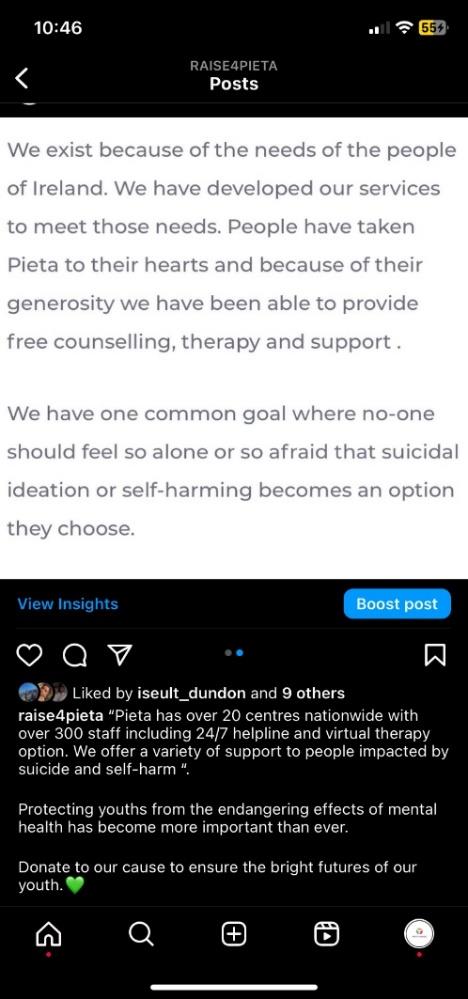
Pieta House is a widely recognised Irish charity, but recognition and revenue are two different problems. Public discussion of executive salaries had introduced a trust deficit among donors, disposable income was tight, and every other charity was competing for the same emotional attention.
The commercial question was clear: how do you convert emotional support into measurable action using only organic digital marketing?
Move a 16–20 year-old audience from passive empathy to an intentional donation — using only owned content, earned reach and consumer psychology.
Research & Consumer Insights
Every decision downstream was earned by primary and secondary research. Interviews with two age cohorts, PESTEL analysis of the macro environment, and a full SWOT of the charity's donation position.
"Donating to a fundraiser feels more impactful — especially if you know where your money is going."
"Seeing a peer share or donate to a charity sparks my interest and makes me more likely to support the cause."
"I would be hesitant when donating to charities with high paying executive leaders."
"Donating in person feels safer — you can put a face to where your money is going."
- PoliticalSalary scandal + political scrutiny reduced trust.
- EconomicReduced disposable income — yet 90% of adults still donate.
- SocialMental health awareness at all-time high in target cohort.
- TechnologicalInstagram + JustGiving remove friction between intent and action.
- EnvironmentalLow relevance — deprioritised.
- LegalCharity regulator scrutiny raises the bar on transparency.
- · Recognised brand
- · Emotional cause
- · Existing awareness
- · Trust deficit
- · No paid budget
- · Small owned reach
- · Peer sharing
- · Influencer earned media
- · JustGiving frictionless UX
- · Donor fatigue
- · Competing causes
- · Cost-of-living squeeze
Consumer Psychology
People don't donate because charities ask. They donate when they emotionally identify with a cause they trust.
The research reframed the campaign entirely. The task was not "post about mental health" — the task was to close the psychological distance between an emotion and a tap. Every content decision from that point had a specific psychological job.
Growth Strategy
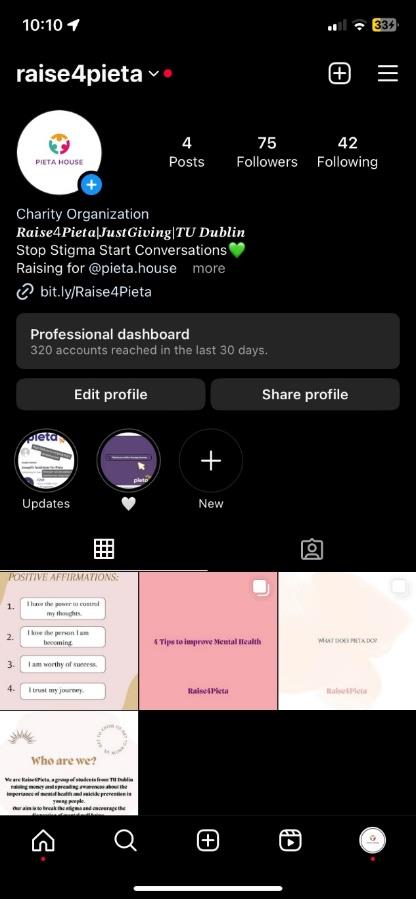
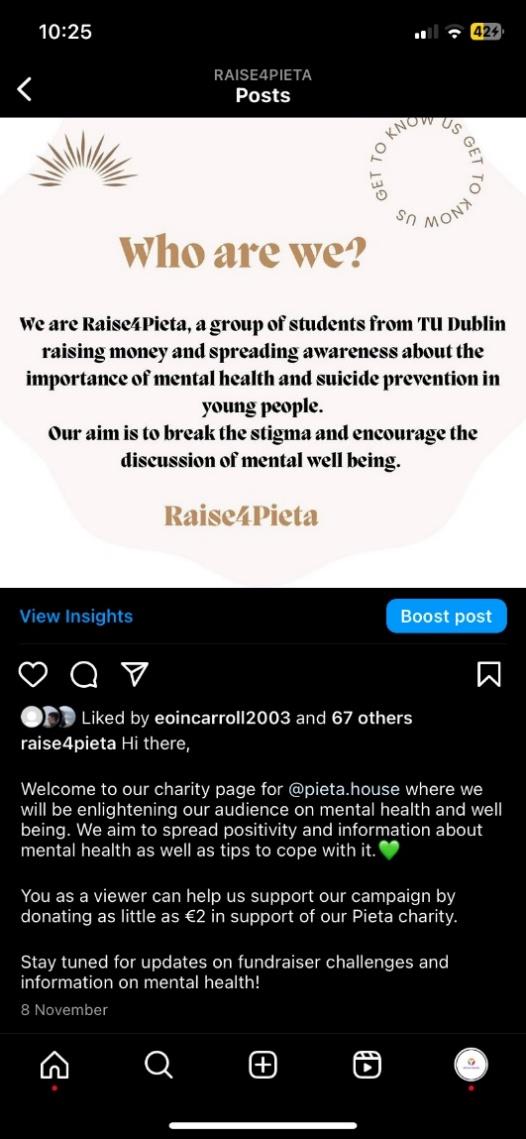
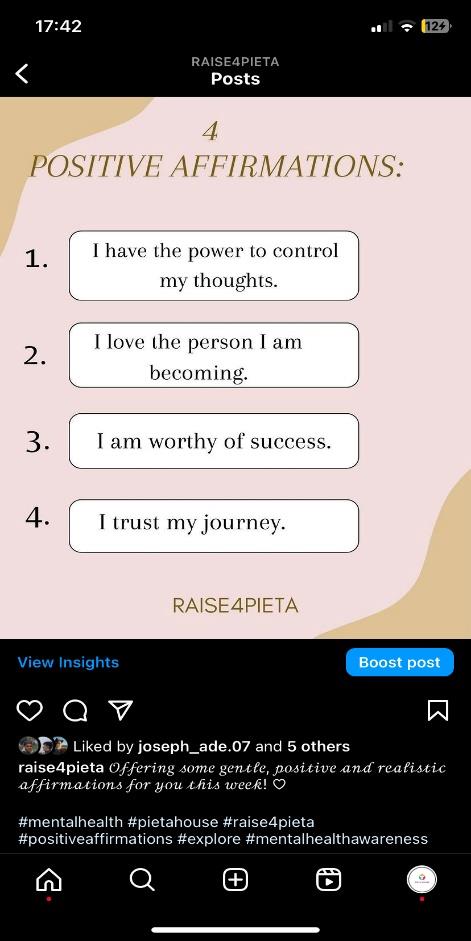
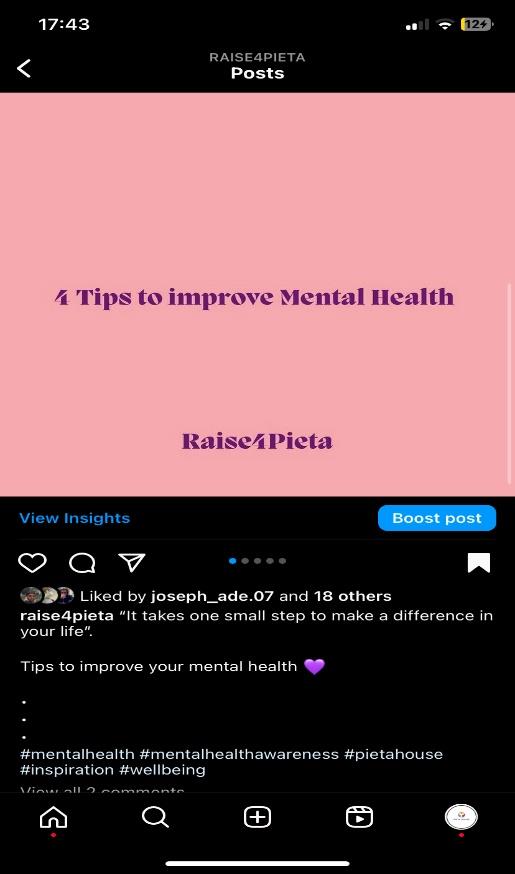
The campaign was intentionally staged. Each post existed to move the audience one step closer to a donation — no post was decoration.
Organic Growth Engine
Campaign Assets
Influencer Strategy
With no paid budget, distribution had to be earned. Two targeted influencer asks delivered a step-change in reach — and a direct, measurable donation.
- Traffic spike within 24h
- Profile visits surged
- New follower cohort added
- Direct financial contribution
- Anchored social proof
- Reach unlocked for phase two
Earned media is what performance marketers use when the media budget is zero. Two conversations generated more reach than any organic post ever could.
Performance Dashboard
Optimisation Opportunities
Strategic Reflection
Marketing isn't simply about generating clicks. When the objective is behavioural change, the real challenge becomes earning trust, creating emotional relevance and reducing friction between intention and action.
This campaign reinforced my belief that the strongest marketing systems don't manipulate emotion — they understand it. People rarely donate because they're asked. They donate when trust, emotion and relevance align. Building that pathway — from awareness to action — is what performance marketing is ultimately about.